Generational Healing Through Self-Defense: A AANHPI Family Workshop in Colorado
How can we protect ourselves and our families?
It’s a difficult, heavy question, but also a real one. We hear the stories, we see what’s happening around us. Many of us are carrying it everyday, something we feel in the background as we go about our days and care for the people we love. This weight can shape how we move through the world.
More than 4 in 5 female survivors experienced sexual violence before age 25 and more than 1 in 10 female high school students have been forced sexual contact, according to the Center for Disease Control (CDC). We share this not to overwhelm, but to gently name why these conversations matter, and why starting them earlier can make a difference.
So to open up conversations, we wanted to create a safe place at Asian Girls Ignite’s (AGI) Generational Healing Karate Workshop for families to take steps to prepare to protect themselves, their loved ones, and their community.
Safety Doesn’t Have to Be Carried Alone
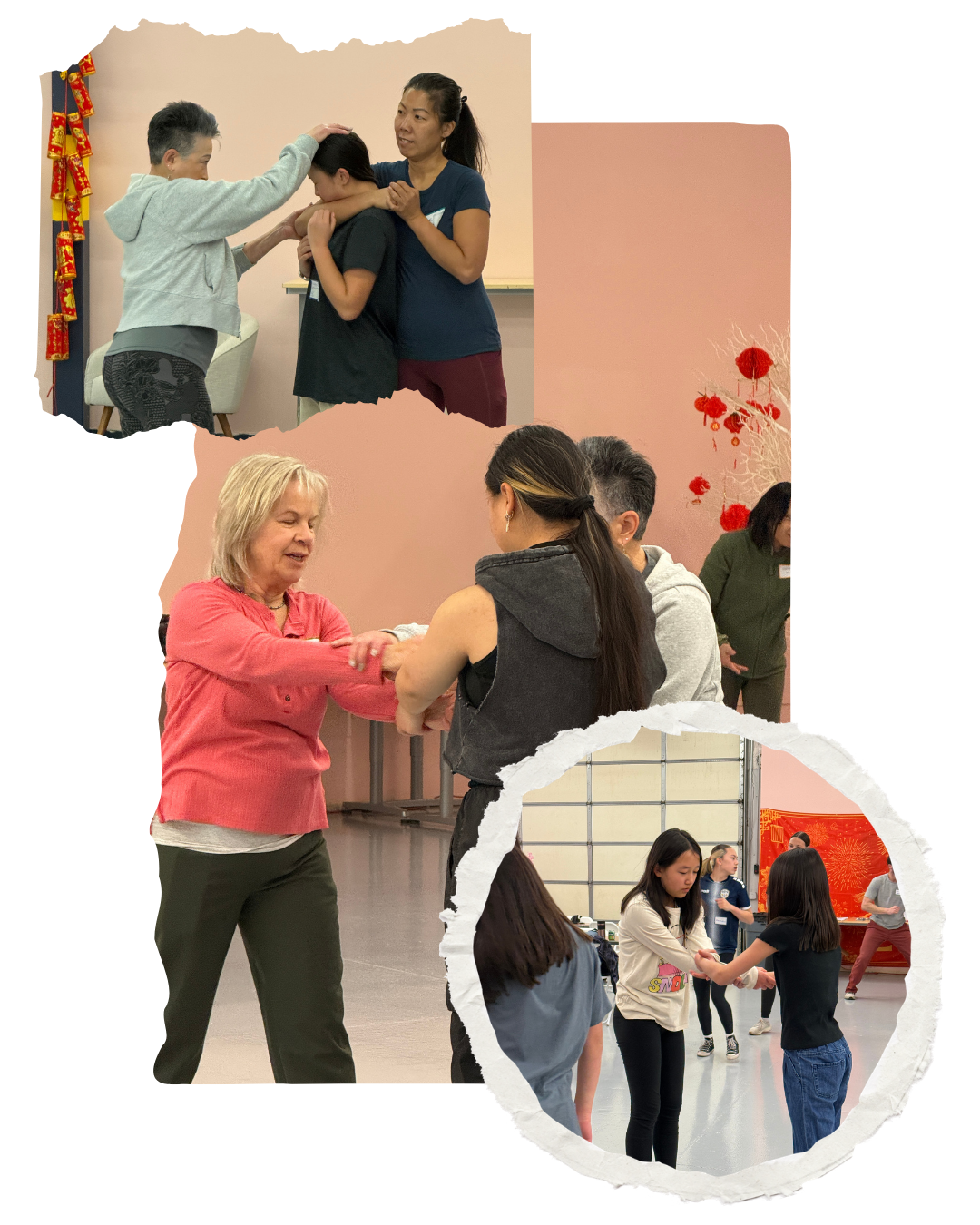
One thing that came up again and again during the workshop was that safety doesn’t have to be something young people carry on their own.
When they are expected to figure things out alone, it can feel isolating. But when caregivers and youth learn side by side, what might have once felt difficult to bring up becomes something you can take on, together.
This is one way intergenerational healing can take shape. As youth begin to trust their instincts and adults feel more equipped to support with care instead of fear, overtime, it can become less about “what if something happens” and more about “we have the tools, and we have each other.”
Hands-On Learning with Colorado Budokan
We had the opportunity to learn from Colorado Budokan, a Denver Shotokan Karate and Japanese Martial Arts school based in Denver, CO, at the Social Fabric Hub.
Meet Akemi & Candice
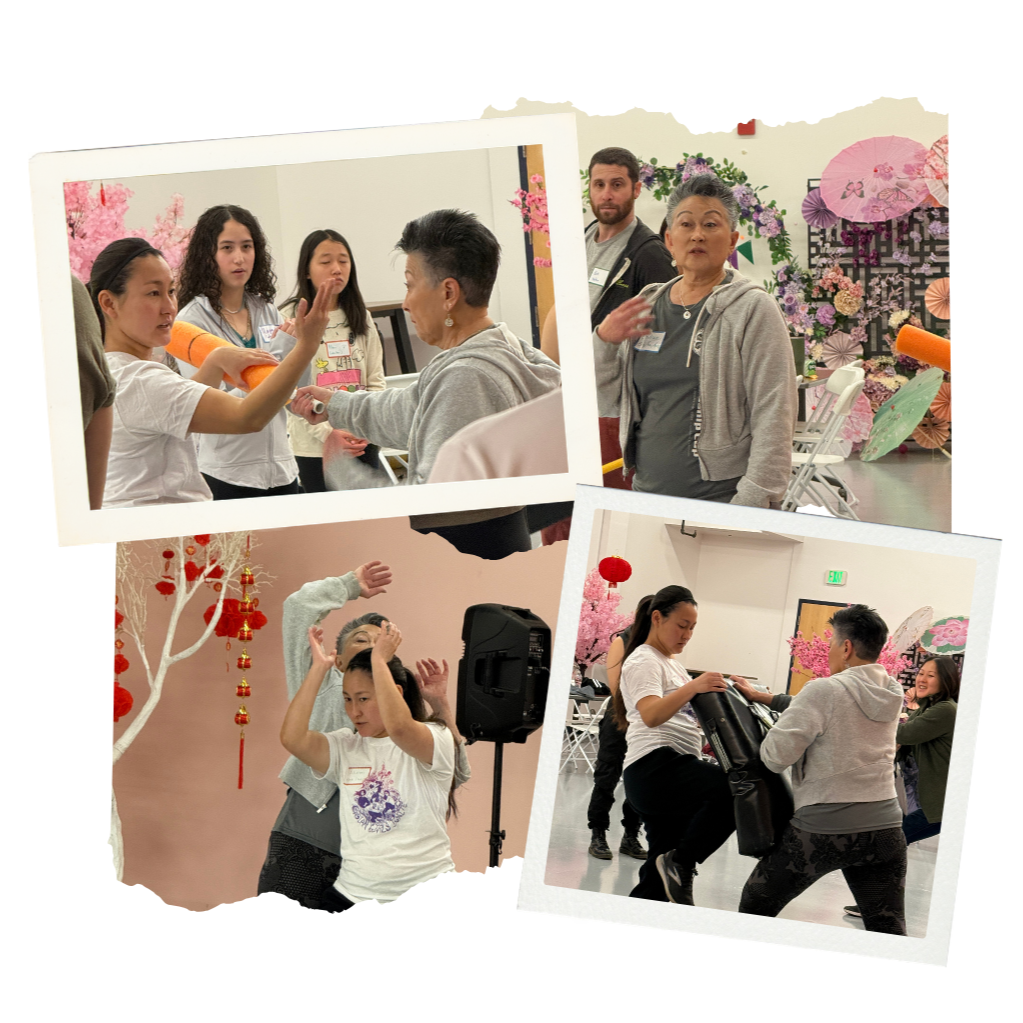
Akemi Tsutsui, is a Nikkei storyteller, teacher, and visual/experimental creative, and is an Assistant Instructor at Colorado Budokan. Akemi has trained in formal Shotokan karate since 1997.
Alongside Akemi was Assistant Head Instructor Candice Tsutsui, who began her formal karate training in 1981. She currently holds a 6th degree black belt and is recognized as Renshi, a teaching title.
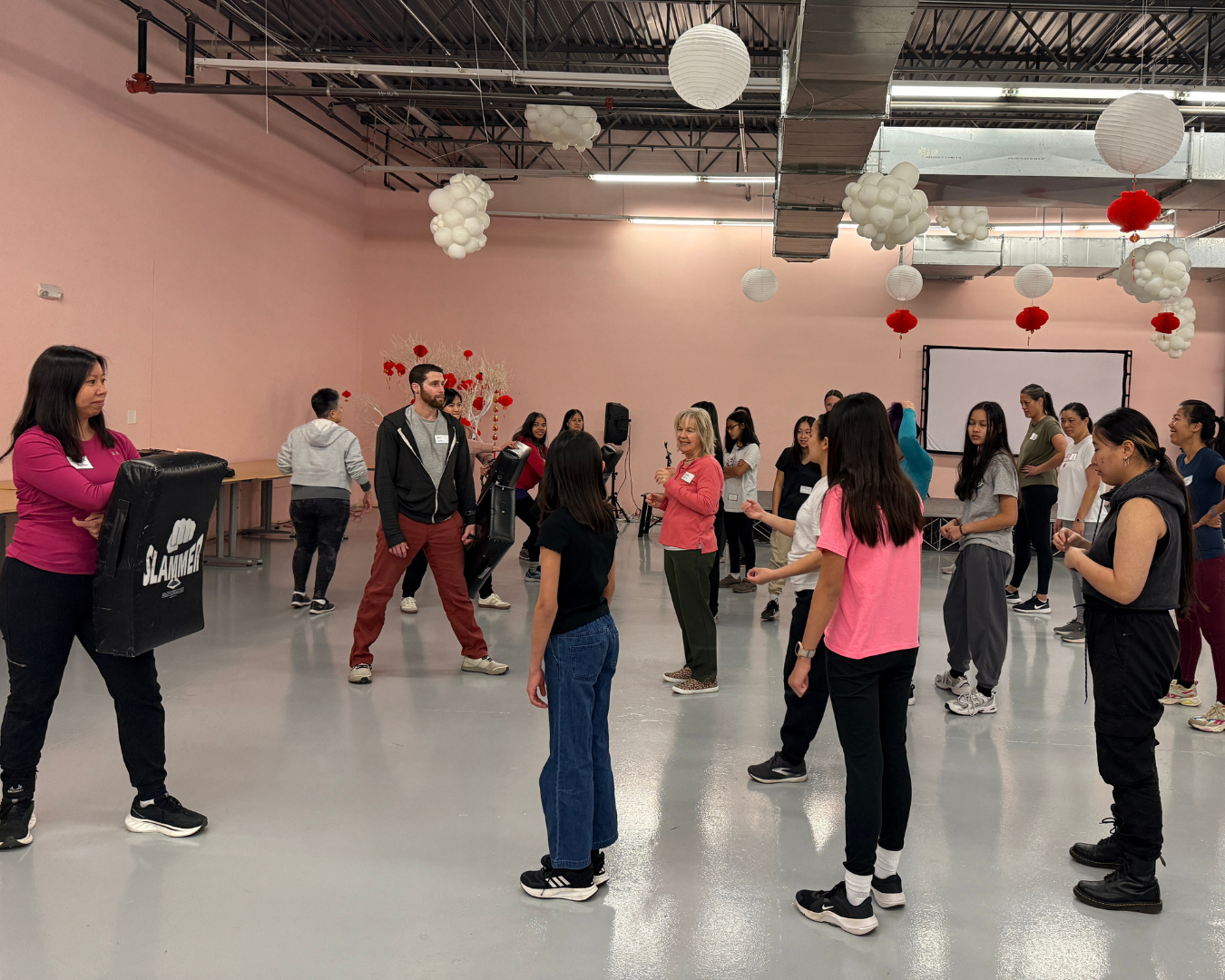
We began by slowing down, connecting with our breath, noticing our bodies, and easing into steadiness.
One of the most memorable parts was practicing the kiai, a sharp shout to hone in energy, focus, and breath into karate techniques. This is also a strategic way to intimidate opponents.
In the workshop, we were reminded that our bodies are often more capable than we’ve been taught to believe. As simple as a solid stance, feet planted, weight centered, can create a sense of stability that supports both confidence and response. Paired with the kiai, that rooted voice from deep within, it becomes less about fear and more about presence. Through balance, body awareness, and learning how it feels to be grounded without relying on eye sight, we trusted our body’s natural senses to protect ourselves.
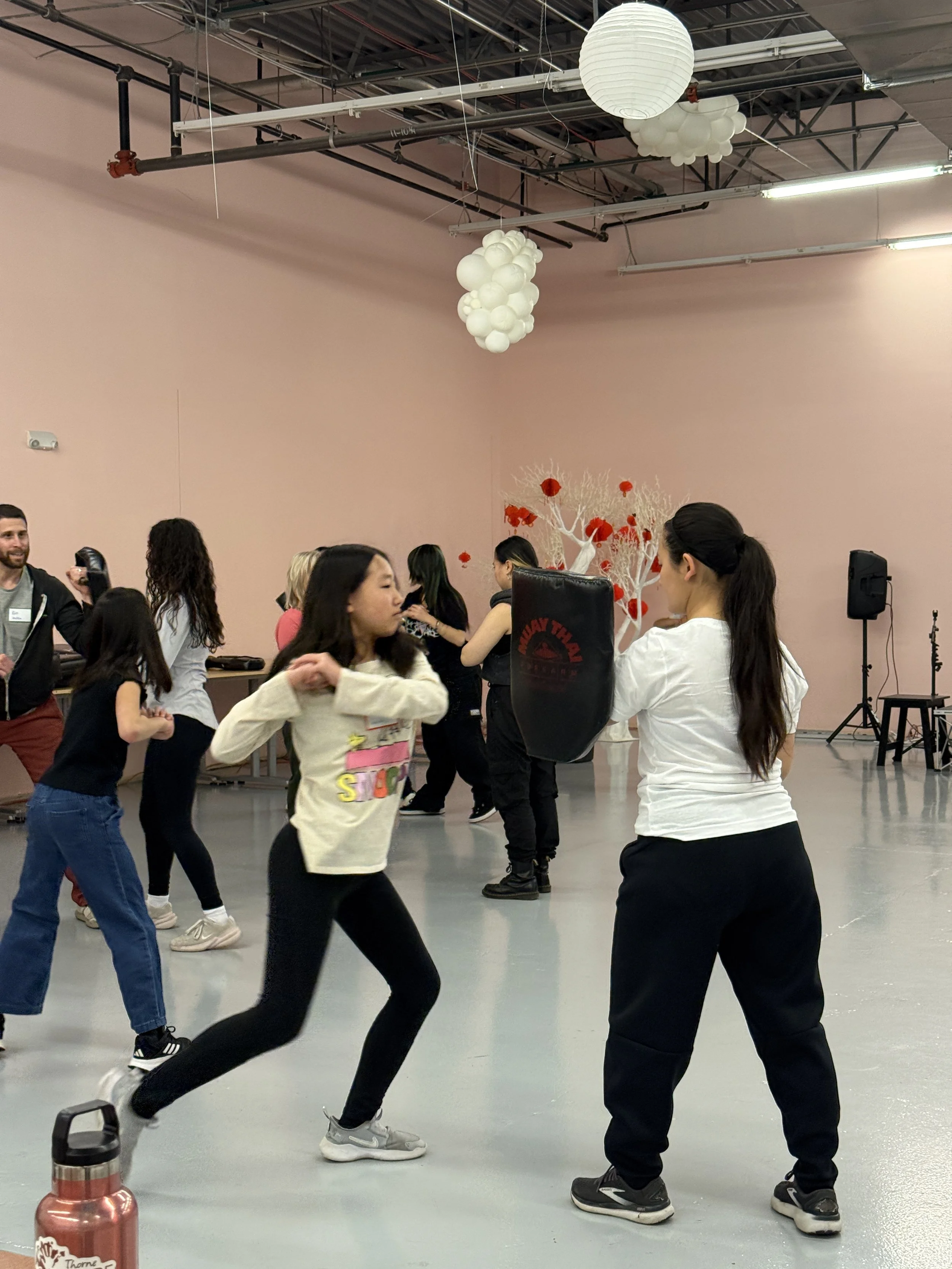
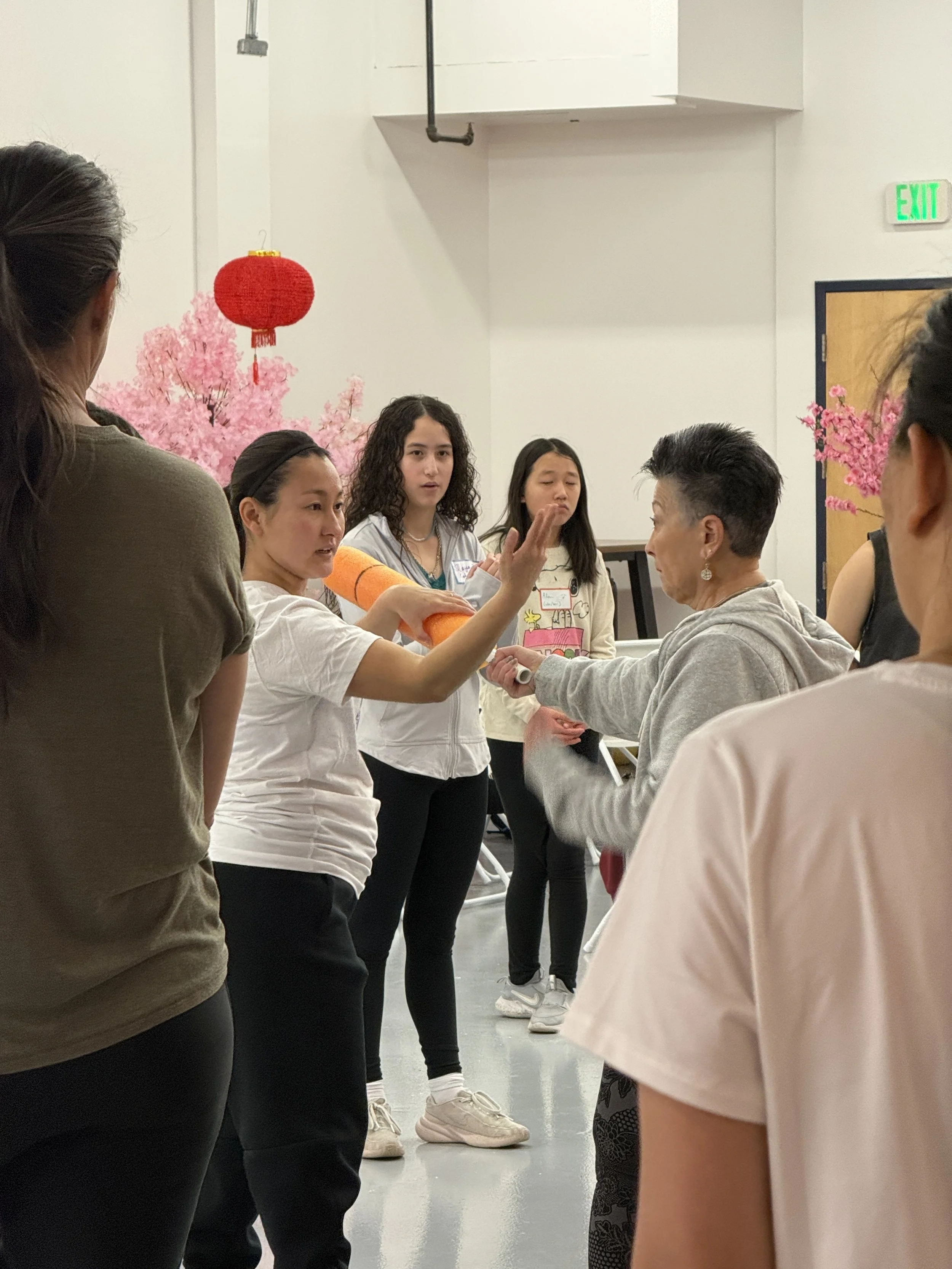
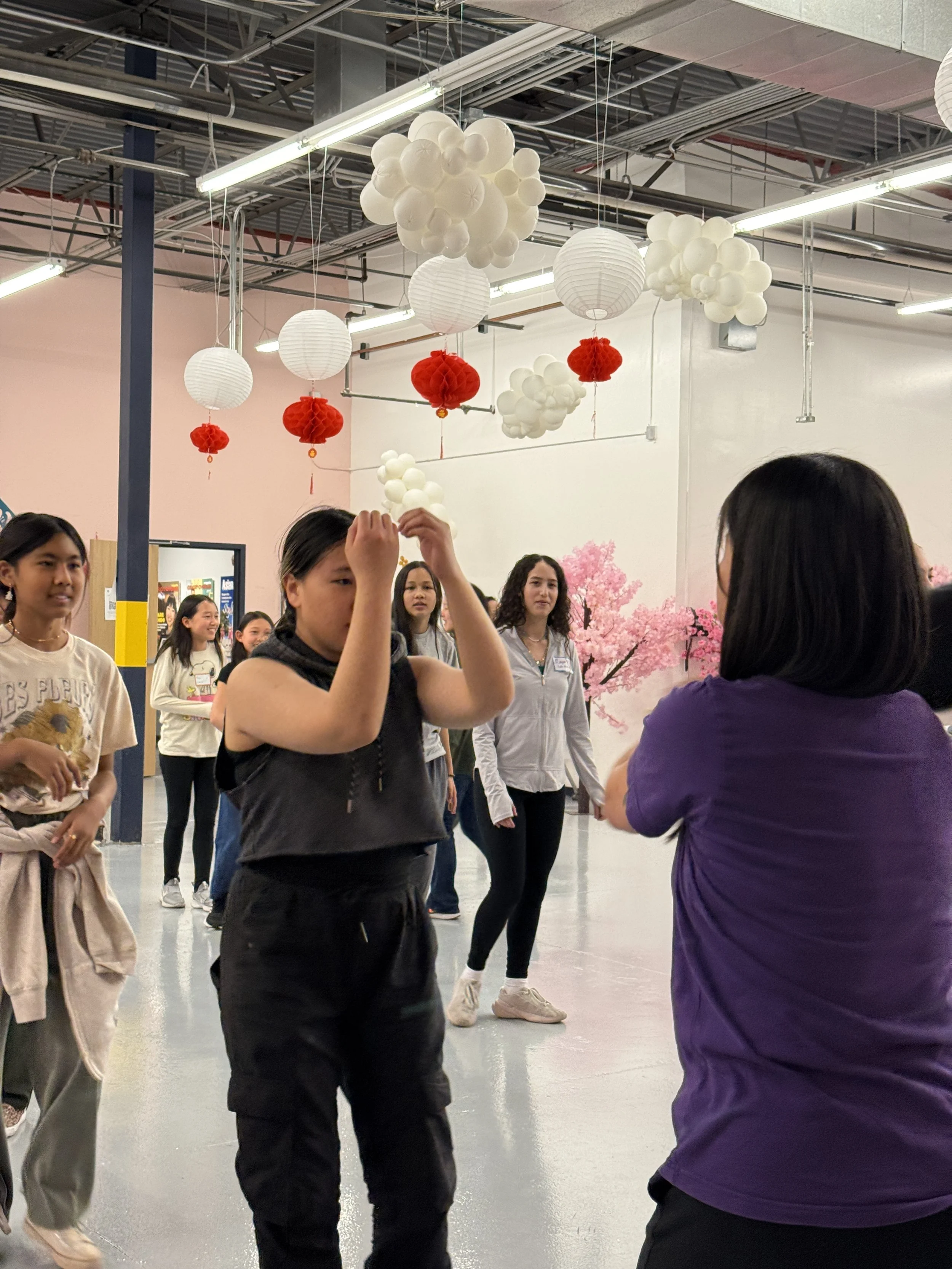
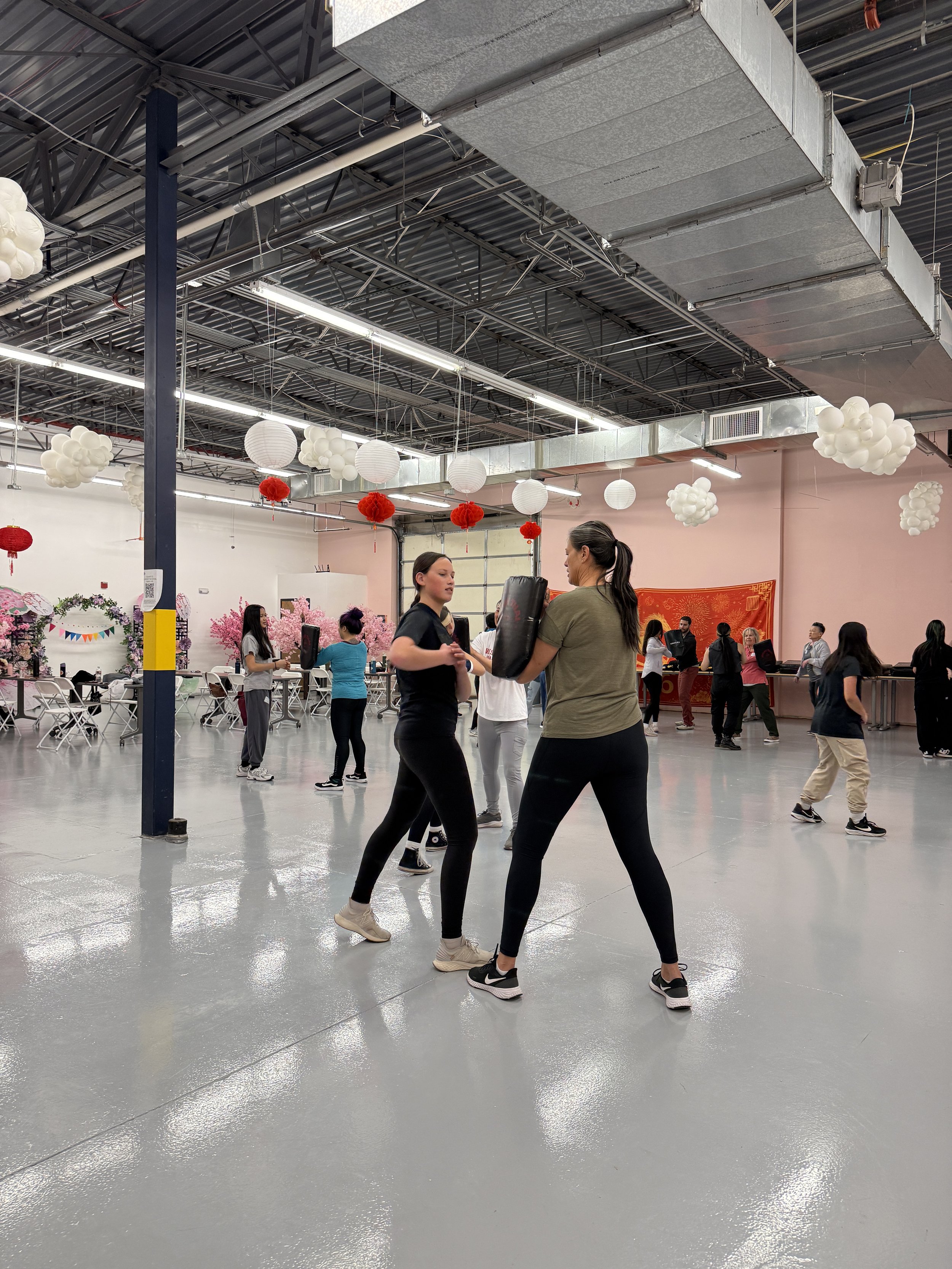
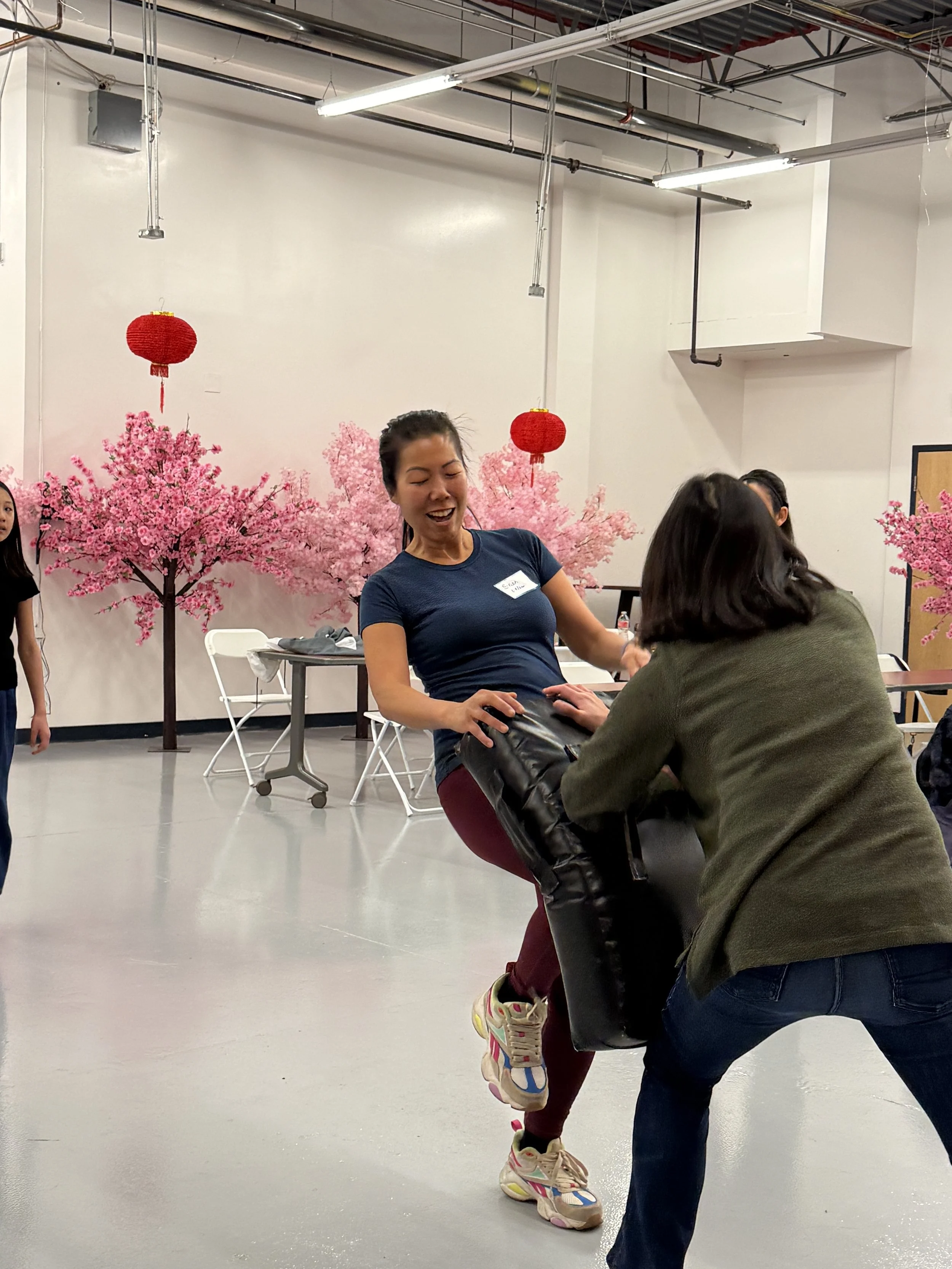
We recognized that it could have felt uncomfortable to do the kiai at first. With Asian American Native Hawaiian Pacific Islander (AANHPI) individuals, being loud or taking up space doesn’t always feel natural. Oftentimes, cultural expectations, past experiences, and our personality can shape that. But in that room, there was room to try and speak louder than usual, giving ourselves permission to go against what we have been accustomed to.
There were also thoughtful conversations around boundaries and consent. What makes us feel comfortable? What doesn’t? How do we navigate differences in cultural norms while still honoring personal space? An example is a hug from a stranger versus a hug from a loved one- in American culture, it can be very common to greet another with a hug, but in some cultures, physical contact is not common.
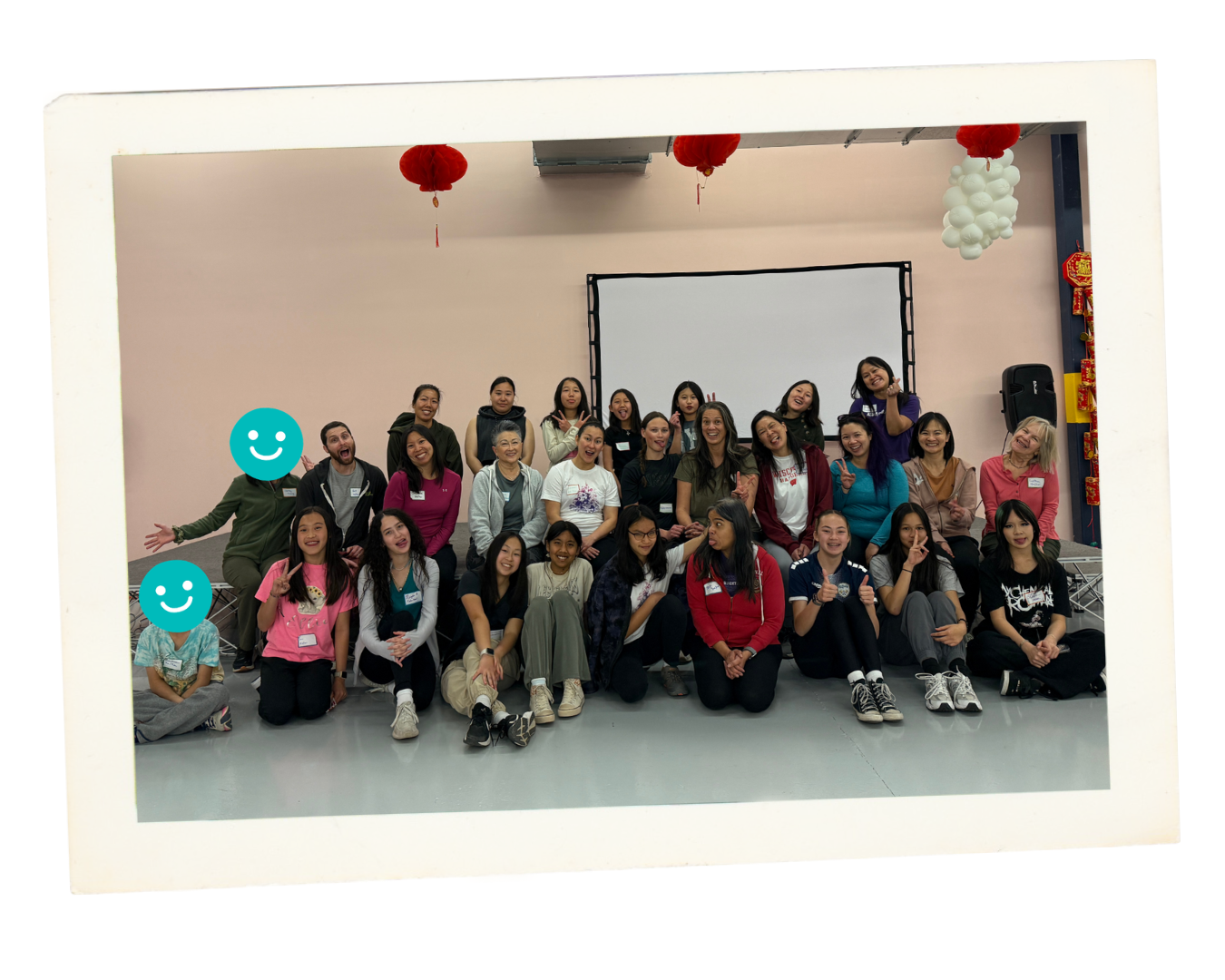
By the end, students and families were curious of how they can continue to grow their confidence through self-defense and a sense of openness to allow themselves to take up room when and where they want.
Why Talking About Safety is Important in the Asian Community
For many AANHPI families, conversations around safety aren’t always easy to start or continue.
Whether it be language barriers, cultural nuances, safety as a socially taboo topic, or simply not being ready yet, those barriers don’t mean that the conversation isn’t possible.
Spaces like this Generational Healing Karate Workshop offers a starting point, centering care, connection, and shared education and understanding. Safety isn’t only about physical skills, it can also look like communication, trust, and knowing you’re supported.
Maybe it can look like your child feeling more confident in their voice, or a caregiver feeling more connected to how they can show up.
And maybe most importantly, it can look like not having to navigate these things alone.
Stay Connected
At Asian Girls Ignite, we’re continuing to build safe spaces where AANHPI youth and families can learn, connect, and grow together.
If this resonates with you, we’d love to stay in touch.
Sign up for the Asian Girls Ignite newsletter to hear about future workshops in Colorado and other community gatherings.
Your safety matters. And so does the community around you.